

Understanding the Need for Lift-to-Rise Chairs in the Elderly Population
The Rising Demand for Assisted Living Solutions
As our population ages, the need for assisted living solutions grows. Lift-to-rise chairs are becoming more popular. These chairs help older adults maintain independence and comfort at home.

The number of seniors in the US is increasing rapidly. Many prefer to age in place. This means staying in their own homes as long as possible. Lift-to-rise chairs support this goal.
These chairs offer a blend of comfort and functionality. They help with daily tasks like sitting and standing. This is crucial for seniors with mobility issues or arthritis.
The demand for these chairs reflects a broader trend. There's a growing focus on home-based care solutions. Families and caregivers see them as valuable tools for elder care.
Mobility and Quality of Life: Key Considerations
Mobility is a key factor in quality of life for older adults. As we age, simple tasks can become challenging. Standing up from a chair or sitting down safely can be difficult.
Lift-to-rise chairs address these challenges directly. They provide support during the sit-to-stand motion. This reduces the risk of falls and injuries.
These chairs also promote independence. Seniors can move between sitting and standing without help. This boosts confidence and maintains dignity.
Regular movement is vital for senior health. It helps maintain muscle strength and joint flexibility. Lift-to-rise chairs encourage more frequent position changes.
The psychological benefits are also significant. Maintaining independence can improve mood and mental health. It reduces feelings of helplessness or being a burden to others.
The Mechanics of Lift-to-Rise Chairs: How They Work
The Hydraulic Systems of Lift-to-Rise Chairs
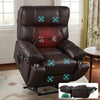
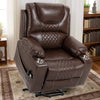
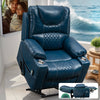
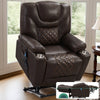
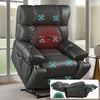
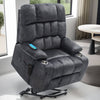
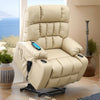
Lift-to-rise chairs use hydraulic systems to assist users. These systems provide smooth, controlled movements. They make it easy to transition between sitting and standing positions.

The hydraulic mechanism is activated by a simple control. Usually, this is a button on the chair's armrest. When pressed, it triggers the lifting action.
The system uses fluid pressure to raise or lower the chair. This creates a gentle, stable motion. It's much safer than trying to stand up unaided.
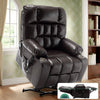
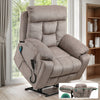
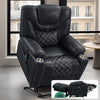
Most models offer multiple positions. Users can adjust the chair for sitting, reclining, or standing. This versatility makes them suitable for various activities.
The hydraulic system is designed for safety and reliability. It can support different weights and body types. Regular maintenance ensures long-term performance.
The Role of Ergonomics in Ease of Use
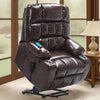
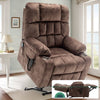
Ergonomics plays a crucial role in lift-to-rise chair design. These chairs are shaped to support the body's natural contours. This ensures comfort during extended periods of use.
The seat and backrest are carefully angled. They distribute weight evenly to reduce pressure points. This is especially important for seniors with circulation issues.
Armrests are positioned to provide support during the lifting process. They help users maintain balance as they transition to standing.
Controls are placed within easy reach. They're designed to be simple and intuitive. Even those with limited hand dexterity can operate them.
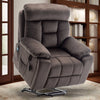
Many models feature adjustable components. This allows the chair to be customized for individual needs. It ensures a perfect fit for users of different heights and sizes.
Advantages of Lift-to-Rise Chairs for Older Adults in the United States
Enhancing Mobility and Independence
Lift-to-rise chairs significantly enhance mobility for older adults. They provide crucial support for those with weakened muscles or joint pain. This support allows seniors to move more freely in their homes.

These chairs reduce the physical strain of sitting down and standing up. This can prevent muscle fatigue and reduce the risk of falls. It's especially helpful for those with conditions like arthritis or back pain.
Independence is a key benefit of these chairs. Seniors can change positions without calling for help. This boosts self-esteem and reduces reliance on caregivers.
The chairs encourage more frequent movement throughout the day. This can improve circulation and reduce the risks of prolonged sitting. It's an easy way to incorporate more physical activity into daily routines.
For many, these chairs mean the difference between staying at home or moving to assisted living. They extend the period of independent living, which is often a primary goal for seniors.
The Impact of Lift-to-Rise Chairs on Elderly Care and Rehabilitation Centers
Lift-to-rise chairs have transformed care in elderly and rehabilitation centers. They've become essential tools for patient comfort and staff efficiency.
In these settings, the chairs help reduce the physical strain on caregivers. They minimize the need for manual lifting, lowering the risk of workplace injuries.
Patients in rehab centers benefit from the chairs during recovery. The lifting mechanism supports gradual increases in mobility. This aids in building strength and confidence.
The chairs contribute to a more dignified care environment. Patients feel more in control of their movements. This can positively impact their overall attitude towards recovery.
Many centers report improved patient outcomes with these chairs. They support better posture and encourage more movement. This can speed up recovery times in some cases.
Staff find that the chairs make daily care routines easier. Tasks like helping patients to meals or therapy sessions become simpler. This allows more time for other aspects of care.
The versatility of these chairs makes them valuable in various care scenarios. From short-term rehab to long-term care, they adapt to different needs. This makes them a cost-effective solution for care facilities.